
The committee said the move 'clearly undervalued the company and its long-term growth prospects'.

The combined market-cap of all listed Adani group firms has plunged nearly Rs 7.11 trillion since January 24 when the Hindenburg report was made public.
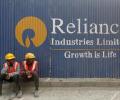
Reliance announced a rights issue of Rs 53,125 crore, which it said was the biggest in India.

India's harsh lockdown has left companies grappling with temporary closure, chaotic supply chains and depressed demand. Consequently, business plans have been modified.

Illustration: Uttam Ghosh/Rediff.com After a brief respite at the year's start, FPIs have dumped shares worth more than $5.7 billion (Rs 42,596 crore), taking the cumulative net outflows since October to $10.5 billion (Rs 78,466 crore), and adding to the volatility on the bourses. The figure would have been a lot worse had it not been for net purchases to the tune of $5.7 billion in the primary market from October to date.

Cascading effect of rising raw materials will result in inflation, high rates, slow capex

'How do you stay so energised? So young?' 'Dev Anand flashed that familiar crooked grin and told me, "The mind never grows old. It urges you to surge ahead".'

According to industry figures, the pre-Covid demand for liquid medical oxygen (LMO) before the pandemic was 700 tonnes per day across the country. Now, with the second wave, the demand has gone up more than seven times, reports Jyoti Mukul.
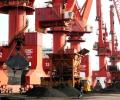
'The coronavirus impact is much bigger than what the market had predicted. We are helpless and simply watching the market at present. Nothing can be done,' said Anil Devli, chief executive officer (CEO) of Indian National Shipowners' Association (INSA).

According to estimates, if the companies are not allowed to raise petrol rates at least Rs 5 a litre by the first fortnight of September, they might begin to suffer underrecoveries on this decontrolled auto fuel, too -- for the first time this financial year.

A yellow glow is likely to stand out amid grey geopolitical clouds in 2023, with gold price projected to touch Rs 60,000 per 10 grams in the Indian market as more investors veer towards safe-haven assets. In a year where volatility was more a norm than an exception, gold prices in the international market oscillated from a peak of $2,070 per ounce in March to a low of $1,616 per ounce in November and is steadily recovering since then, according to market experts. At the beginning of 2022, gold prices were around $1,800 an ounce.

No lives were lost after cyclone Biparjoy made landfall. Preparations for Biparjoy were not only extensive, they were also telecast far and wide. Ahead of the cyclone's landfall, Shyam G Menon observes there was considerable publicity on how much the government was geared up to face the storm and its aftermath.

Billionaire Gautam Adani on Tuesday did an hour-long session of yoga exercises in the open air as he led corporate India to join the International Day of Yoga celebrations. Several public and private sector companies held yoga sessions at their offices to promote the adoption of exercise in daily routines to stay fit and healthy. Adani, chairman of logistics-to-energy conglomerate Adani Group, and his wife Priti, who heads the Adani Foundation, "participated with more than 1,000 members of the Adani Parivaar team to celebrate health, mindfulness and meditation," the group said in a statement. The session was held at a football ground at Adani Shantigram in Ahmedabad. Several other business leaders tweeted pictures of their yoga sessions.

The Central Bureau of Investigation (CBI) had told the finance ministry some "well-known" companies in the power, oil, and telecommunications sectors were involved in round-trip trading by indulging in third-party transfers in violation of law.

'Calendar year 2023 is going to be big as pessimism takes a back seat.'

A vilification campaign against Rosneft has begun in right earnest, says M K Bhadrakumar.

ONGC is likely to pay Rs 17,000 cr to subsidise products by the end of this fiscal.

Billionaire Mukesh Ambani's Reliance Industries has signed a pact to invest an undisclosed amount in a giant petrochemical hub being built in the UAE. The oil-to-telecom conglomerate will join the recently-formed Ta'ziz joint venture of Abu Dhabi state energy giant Adnoc and state holding company ADQ for developing the Ruwais Derivatives Park in western Abu Dhabi. A company statement said an agreement has been signed for Reliance to invest in the project but did not give details. Unconfirmed reports put the investment at about $1.5 billion.

Usually, a fall in oil prices is followed with a cut in retail prices of auto fuels and the government passes on the benefit to consumers. However, Morgan Stanley believes gains this time around will remain capped.

Earlier this year, the Union Cabinet gave the management of state-run companies the freedom to decide on divesting their subsidiaries. However, the very next day a meeting was held at the top level of the Government of India, for the presentation of proposals for more autonomy for state-run companies. Interestingly, no chiefs of any of these companies were invited. It is a problem that will stare the government in the face with the state-owned banks too, as talks have again begun for inviting strategic investments in these companies.
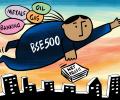
The biggest jump in earnings and decline in P/E multiples has occurred with top companies in metals and mining, corporate banking, and the oil and gas sectors.
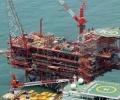
ONGC and Oil India bought a five per cent each of the government's stake in IOCL, yielding Rs 5,340 crore (Rs 53.4 billion) to the government.

With the international markets facing uncertainty after Russia invaded Ukraine and Western nations retaliated with sanctions, Indian companies are putting their international fundraising plans on hold as they wait for the markets to recover. Bankers said apart from the geopolitical crisis, international rates are hardening in anticipation of interest rate hikes by the US Federal Reserve to control rising prices in the US. The Ukraine situation has implications for the market. In such a situation, international investors try to shift to safe haven assets by exiting from emerging markets.

If there is a morality tale here, it is that debt and death spare no king.

Since 2000, per capita GDP has grown faster in India's rural areas than in its urban centres. Rural incomes are growing, and consumers are buying discretionary goods and lifestyle products, including mobile phones, television sets and two-wheelers, says Sanjay Dawar, MD, Management Consulting, Accenture, India.
Since 2000, per capita GDP has grown faster in India's rural areas than in its urban centres. Rural incomes are growing, and consumers are buying discretionary goods and lifestyle products, including mobile phones, television sets and two-wheelers, says Sanjay Dawar, MD, Management Consulting, Accenture, India.

Billionaire Mukesh Ambani on Friday backed the proposed data privacy and cryptocurrency bills, saying India is putting in place the most forward-looking policies and regulations. Ambani, who has been a votary of Indians owning and controlling their own data and the nation drafting strict rules around how digital information is stored and shared, said nations have the right to build and protect strategic digital infrastructure. Stating that data is the 'new oil', he said every citizen's right to privacy has to be safeguarded. "India is putting in place the most forward-looking policies and regulations," he said at the Infinity Forum, hosted by International Financial Services Centres Authority (IFSCA).

Billionaire Mukesh Ambani's Reliance Industries Ltd on Friday reported a 22.5 per cent rise in net profit for the quarter ended March on the back of bumper oil refining margins, steady growth in telecom and digital services and strong momentum in the retail business. The oil-to-retail-to-telecom conglomerate's consolidated net profit rose to Rs 16,203 crore in the quarter ended March 31, 2022 from Rs 13,227 crore, the firm said in a statement. Net profit, however, fell 12.6 per cent sequentially -- breaking a six-quarter chain of quarter-on-quarter improvement.

Sharp fall in capital goods production and manufacturing activity also dented sentiments.
Fitch Ratings has upgraded Reliance Industries Ltd's (RIL) rating to 'BBB', one notch above India's sovereign rating, as the company benefits from cash flow generation across diversified business segments and continuation of deleveraging. In a statement, Fitch said it has upgraded RIL's long-term foreign-currency issuer default rating (IDR) to 'BBB', from 'BBB-', with a negative outlook. At the same time, the agency has affirmed RIL's long-term local-currency IDR at 'BBB+' with a stable outlook.
In all, Reliance has a stake in 34 exploration blocks in the country.

'We plan to touch Rs 1 trillion of Amul brand's turnover in the next five years.'

'Why should our government opt for unproven technology that has been rejected by most countries across the globe?' 'Being dependent on any other nation to supply you seed for your good crops is another form of slavery.'

As India looks to mend its Covid-battered economy, one thing that will grab the attention of all concerned is the path that both wholesale and retail inflation will follow. Even the Reserve Bank of India in its latest policy statement said, "Going forward, the inflation trajectory is likely to be shaped by uncertainties impinging on the upside and the downside.
The three-member committee will look into the safety and security of the ONGC's offshore operations.

The Congress needs to reorganise itself at the grassroots, infuse younger blood, and have more boots on the ground. Just offering freebies is not the answer anymore. Leadership matters, asserts Ramesh Menon.

Immunity boosting foods and drinks. Sustainable fashion. Beauty products with natural ingredients. There was always a market for these, and the pandemic has only made it bigger. Within beauty, brands have recorded a greater demand for ayurveda products.
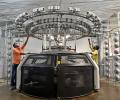
Manufacturing companies have been outperformers on the bourses in the current year, leading to a rise in their weighting in the benchmark index. Companies in sectors such as FMCG, automobile, pharmaceuticals, metals, cement, and agrochemicals now account for 25.43 per cent of the Nifty 50 index, up 88 basis points from 24.55 per cent at the end of December last year and a record low of 23.1 per cent at the end of CY20. The manufacturing sector is now dominated by FMCG majors such as Hindustan Unilever, ITC, Asian Paints, Nestle, and Britannia, accounting for 45 per cent of the combined market cap of all manufacturing companies in the index.

From the 30-share pack, Titan, Tech Mahindra, Maruti Suzuki India, Wipro, Nestle India, TCS, Larsen & Toubro, HCL Technologies, Tata Steel and HDFC Bank were among the major laggards. NSE Nifty declined 69.75 points to settle at 17,153.
